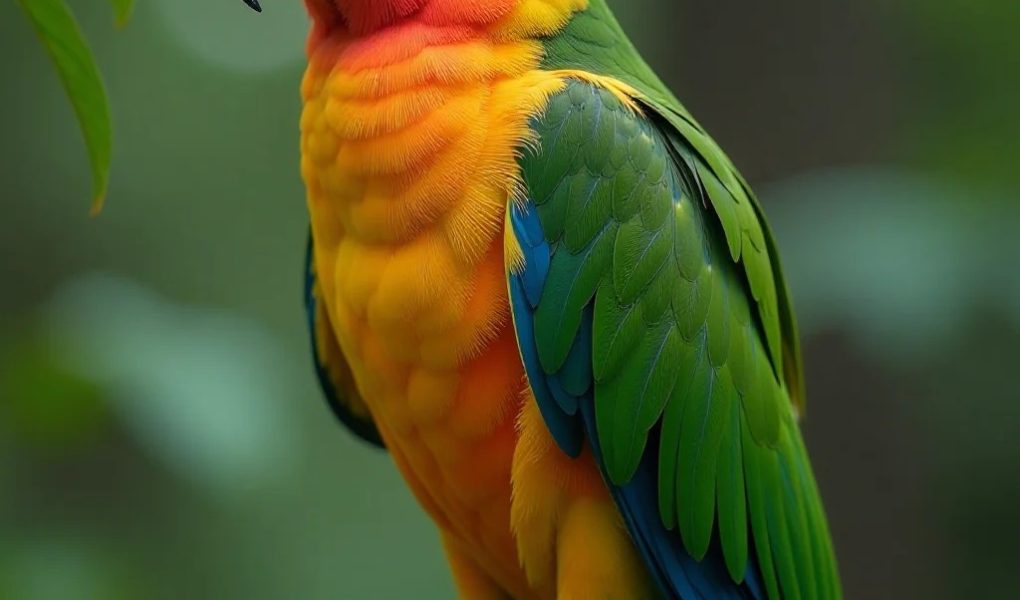
Discover why parrots are among the most intelligent birds on Earth and why many species need our help.
Introduction
With their vivid plumage, remarkable ability to mimic human speech, and playful personalities, parrots have captivated humans for centuries. But these colorful birds are far more than entertaining pets — they’re among the most intelligent creatures in the animal kingdom.
From tropical rainforests to Australian scrublands, parrots have evolved incredible adaptations. Yet many species face serious threats from habitat loss and illegal trade.

Parrot Diversity
There are nearly 400 parrot species across the world.
Major Parrot Families:
| Family | Examples | Traits |
| Macaws | Scarlet, Blue & Gold | Largest parrots, long tails |
| Cockatoos | Sulphur-crested, Umbrella | Crested, affectionate |
| Amazons | Yellow-headed, Blue-fronted | Great talkers, green |
| African Greys | Congo, Timneh | Smartest parrots |
| Lovebirds | Peach-faced, Fischer | Small, colorful, pair-bonded |
| Budgerigars | Common budgie | Small, popular pets |
| Cockatiels | Normal, Lutino | Small crested, whistlers |
Fun Facts:
– Parrots live on every continent except Antarctica
– Australia alone has 50+ species
– Third most popular pet after dogs and cats
– Lifespans range from 10-15 (small) to 80+ years (large)

Intelligence: Bird-Brain Is a Compliment
Parrots are among the smartest animals on Earth — rivaling primates.
Proven Cognitive Abilities:
– Tool use: Cockatoos solve multi-step puzzles
– Language understanding: Alex the African Grey knew 100+ words
– Problem solving: Open locks, unscrew bolts
– Math: Can count and understand zero
– Self-awareness: Pass mirror test
– Emotional intelligence: Show empathy, jealousy, humor
Alex the African Grey:
Dr. Irene Pepperberg’s famous African Grey parrot:
– Learned over 100 English words
– Could identify 50+ objects by name
– Understood concepts like color, shape, and quantity
– Could answer “what’s different?” between objects
– Said “I love you” to his trainer
– Changed the scientific understanding of bird intelligence
Memory:
Parrots have remarkable memories. They can remember:
– Human faces for years
– Complex sequences of actions
– Locations of hundreds of food caches
– Specific words and phrases

The Power of Speech
Not all parrots talk, but their vocal abilities are extraordinary.
How They Talk:
– Modify airflow through syrinx (vocal organ)
– Have TWO sound sources (humans have one)
– Can mimic dozens of different sounds
– Often use context-appropriate speech
Not Just Mimicry:
Studies show parrots don’t just repeat sounds — they use words meaningfully:
– Alex the Grey could describe objects he wanted
– Some use speech to express emotions
– They can associate words with concepts
– Context-appropriate responses demonstrate understanding
Talking Species:
| Species | Talking Ability |
| African Grey | ★★★★★ |
| Amazon | ★★★★☆ |
| Budgerigar | ★★★☆☆ |
| Macaw | ★★★☆☆ |
| Cockatoo | ★★☆☆☆ |
Social Life in the Wild
Wild parrots live complex social lives.
Social Behaviors:
– Pair bonding: Many mate for life
– Flocks: Some gather in thousands
– Play: Young birds play-fight and explore
– Grooming: Mutual preening strengthens bonds
– Alarm calls: Specific calls for different threats
The Kakapo:
New Zealand’s flightless parrot is one of the world’s rarest birds:
– Only ~250 individuals remain
– Can’t fly but climbs trees expertly
– Weighs up to 4 kg (heaviest parrot)
– Males “boom” to attract females from 5 km away
– One of the longest-living birds (100+ years)
Night Parrots:
Australia’s most mysterious bird, thought extinct until rediscovered in 2013.

Diet and Feeding
Parrots have specialized diets with powerful beaks.
What They Eat:
– Seeds and nuts (primary food)
– Fruits and berries
– Flowers and nectar
– Insects and larvae
– Clay (minerals in some regions)
The Beak:
– Powerful enough to crack Brazil nuts
– Used for climbing, preening, and defense
– Grows continuously throughout life
– Sensitive nerve endings in the tip
– Acts as a “third hand”
Clever Foraging:
– Macaws eat clay to neutralize plant toxins
– Cockatoos use tools to extract insects
– Some parrots follow army ants to catch fleeing insects

Conservation Crisis
Parrots face one of the most severe conservation crises of any bird family.
The Numbers:
| Status | Number of Species |
| Critically Endangered | ~17 |
| Endangered | ~34 |
| Vulnerable | ~42 |
| Near Threatened | ~30 |
Major Threats:
– Habitat loss: Deforestation of tropical forests
– Illegal trade: Millions captured for pets
– Invasive species: Predators on island species
– Climate change: Altered habitats and food sources
– Hunting: Some species hunted for feathers or food
The Illegal Pet Trade:
This is the biggest threat to wild parrots:
– 1-3 million parrots captured annually
– 60-70% die during capture and transport
– 90% of species decline linked to trapping
– Many large macaws worth thousands of dollars
Success Stories:
– Puerto Rican Parrot: From 13 to 500+ birds
– Kakapo: Intensive breeding programs
– Some species recovering with protection

Parrots as Pets
Parrots are popular but challenging pets.
Before Getting a Parrot:
– Research species carefully
– Consider their long lifespan (20-80 years)
– Budget for vet care, cages, toys
– Prepare for noise and mess
– Understand their social needs
The Reality:
– Noise: Can be very loud
– Mess: Scatter food and feathers
– Time: Need daily interaction
– Biting: Can bite hard when stressed
– Destruction: Chew furniture without enrichment
– Commitment: May outlive their owners
What They Need:
– Large cage with room to fly
– Daily out-of-cage time
– Mental stimulation (puzzles, foraging toys)
– Social interaction
– Proper avian vet care
– Varied, species-appropriate diet

Parrots are not just pretty birds — they’re sentient, intelligent beings that deserve our respect, whether in the wild or in our homes.
_1_nini粘fufu_来自小红书网页版-320x200.jpg)