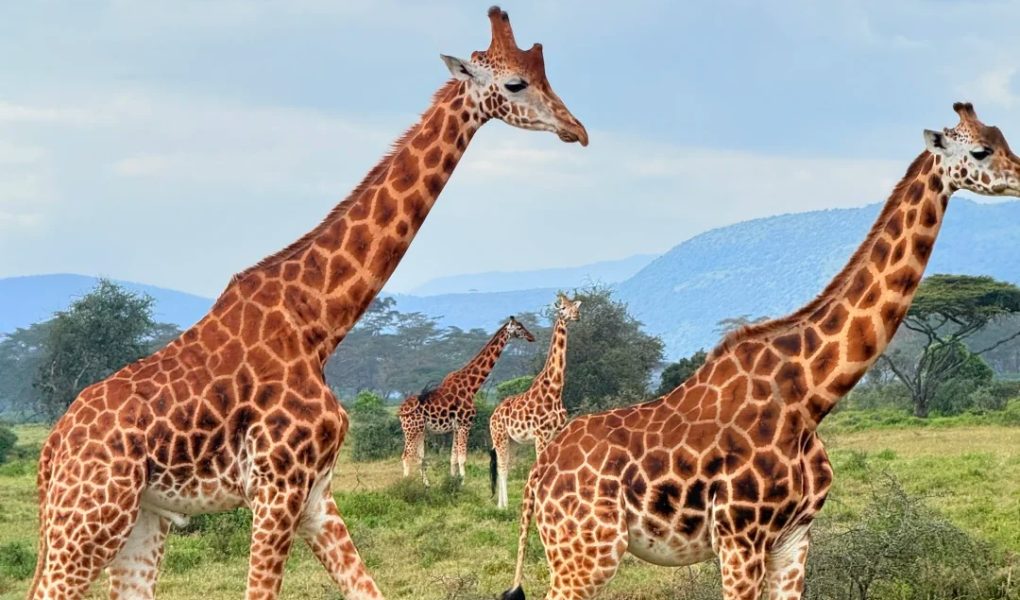
Discover the secrets of the world’s tallest land animal.
Introduction
With their impossibly long necks, spotted coats, and graceful movements, giraffes are among the most recognizable animals on Earth. But despite their fame, many people don’t know much about these gentle giants beyond their appearance.
Giraffes are fascinating creatures with incredible adaptations, complex social lives, and surprisingly strong bonds with each other. Let’s discover what makes giraffes so special.

Species and subspecies
There is one giraffe species (Giraffa camelopardalis), but nine subspecies recognized by their unique coat patterns.
Popular subspecies:
| subspecies | Location | Notable Features |
| Masai Giraffe | Kenya/Tanzania | Largest spots, jagged edges |
| Reticulated Giraffe | Somalia/Kenya | Reddish-orange network pattern |
| Southern Giraffe | South Africa | Star-shaped yellow spots |
| Rothschild’s Giraffe | Uganda/Kenya | Deep brown rectangular spots |
Fun Fact: No two giraffes have the same coat pattern — like human fingerprints!
Physical Characteristics
Giraffes are the tallest land animals on Earth.
Key Stats:
– Height: 4.3-5.8 meters (males), 3.9-4.5 meters (females)
– Weight: 800-1,930 kg
– Neck length: Up to 2.4 meters
– Lifespan: 20-25 years in wild
Body Features:
– Neck: Only 7 vertebrae (same as humans!)
– Tongue: 45-50 cm long, purple-black color
– Legs: About 1.8 meters long
– Heart: 11 kg, biggest of any land mammal
– Horns: Called ossicones, covered in skin and hair
Why the Long Neck?
Despite the myth, giraffes don’t just eat tree leaves. Their long necks help:
– Access food others can’t reach
– Spot predators from far away
– Male competition during mating

Diet and Eating Habits
Giraffes are herbivores with a very specific diet.
What They Eat:
– Acacia leaves (favorite food)
– Flowers and seed pods
– Grass during dry seasons
– Need 34 kg of food daily
Unique Adaptations:
– Long tongue reaches into thorny trees
– Purple-black tongue resists sunburn
– Thick saliva protects from thorns
– Four-chambered stomach for digestion
Water:
Giraffes only need to drink water every 2-3 days. They get most moisture from leaves. This is smart — drinking requires bending down, making them vulnerable to predators.

Behavior and Social Life
Giraffes are more social than scientists once thought.
Social Structure:
– Live in loose, ever-changing groups
– 10-20 individuals typically
– Females more social than males
– No long-term pair bonds
– Groups change throughout the day
Communication:
– Mostly silent (occasional hums at night)
– Body language through postures
– Scent signals for reproduction
– Foot stomping when alarmed
Interesting Behaviors:
– Necking: Males swing necks to fight for mates
– Ruminating: Chew cud like cows
– Sleeping: Only 30 minutes to 2 hours per day!
– Running: Can reach 60 km/h when chased
Conservation Status
Giraffes are Vulnerable — and many people don’t realize they need help.
Population Numbers:
| Year | Wild Population |
| 1985 | ~150,000 |
| 2015 | ~97,562 |
| Today | ~117,000 |
Why They’re Declining:
– Habitat loss: Farms and development
– Poaching: For meat, tails, and skin
– Civil unrest: War in some giraffe regions
– Climate change: Affecting acacia trees
Conservation Efforts:
– Protected areas in African countries
– Community-based conservation
– Anti-poaching patrols
– Research and monitoring programs

Why Giraffes Matter
Giraffes play important roles in their ecosystems:
Ecological Benefits:
– Eat treetop leaves, shaping vegetation
– Their droppings spread seeds
– Provide food for other animals
– Indicators of ecosystem health
Cultural Value:
– Symbol of African wildlife
– Popular in zoos and wildlife tourism
– Featured in African folklore and art
– Emblem of many conservation organizations
The Future
Giraffe numbers have dropped 40% in 30 years — but there’s hope.
What We Can Do:
– Support giraffe conservation organizations
– Choose ethical wildlife tourism
– Reduce our environmental impact
– Spread awareness about giraffe decline
– Avoid products made from giraffe parts
Hopeful Signs:
– Some populations are stabilizing
– International attention increasing
– More protected areas being established
– Youth engagement and social media awareness

Let’s make sure future generations can also witness these magnificent animals reaching for the treetops.