Discover why the lion is called the “King of Beasts” and how these majestic cats live.
Introduction
The lion (Panthera leo) is one of Africa’s most iconic animals. Unlike most cats, lions are highly social creatures that live in family groups called prides. This unique lifestyle has made them one of the most successful predators on the continent.
Known as the “King of Beasts” for their majestic appearance and powerful presence, lions have fascinated humans for thousands of years.

Lion subspecies
There are two recognized lion subspecies:
African Lion (Panthera leo leo):
– Found across sub-Saharan Africa
– Population: ~23,000-39,000 in the wild
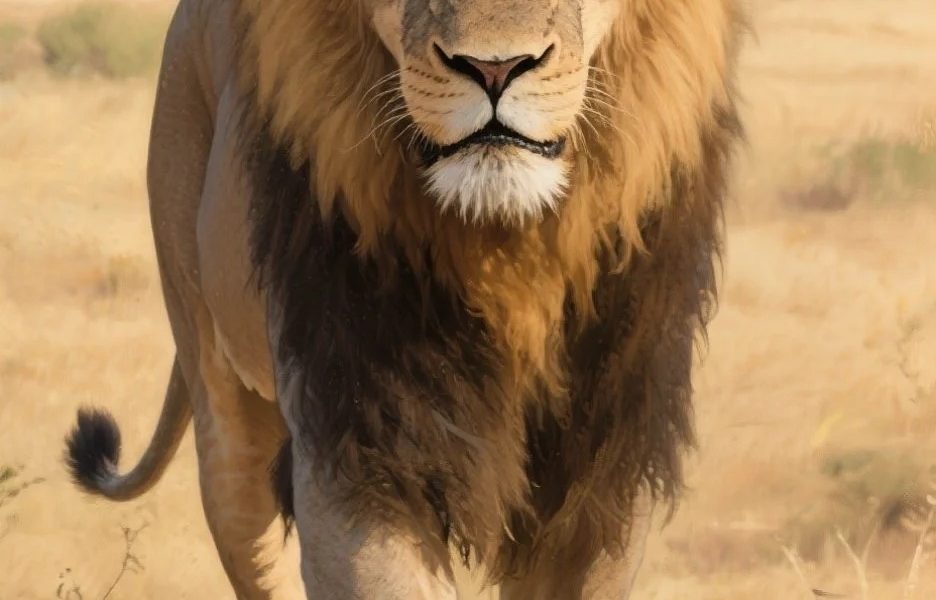
– The classic “mane” belongs to males
Asiatic Lion (Panthera leo persica):
– Found only in Gir Forest, India
– Population: ~650 individuals
– Smaller than African lions, with smaller manes
Fun Fact: Lions are the only cats that live in social groups!

Physical Characteristics
Lions are the second-largest cat species after tigers.
Key Stats:
| Feature | Male | Female |
| Weight | 150-250 kg | 120-180 kg |
| Length | 1.7-2.5 m | 1.4-1.8 m |
| Lifespan | 10-14 years | 15-20 years |
| Feature | Mane (starts at 1 year) | No mane |
The Mighty Mane:
A male lion’s mane is like a peacock’s tail — it signals health and strength to potential mates and rivals. Darker, fuller manes typically indicate better health and higher testosterone.
The Pride: A Lion’s Social World
Lions are unique among big cats for their social behavior.
Pride Structure:
– Size: 5-30 lions per pride
– Core: Related females (mothers, sisters, daughters)
– Visitors: Males (stay 2-4 years before being replaced)
– Cubs: Born year-round, raised by the pride
Daily Life:
– Lions sleep 16-20 hours per day!
– Females do 85-90% of the hunting
– Males protect the territory
– All adults share care of cubs
Hunting and Diet
Despite their reputation, lions don’t always catch what they hunt.
What Lions Eat:
– Wildebeest, zebra, antelope
– Buffalo, giraffe (risky prey)
– Small animals when big prey unavailable
Hunting Success:
– Success rate: Only 25-30% of hunts
– Teamwork makes lion hunts successful
– Females do most of the hunting
– Males eat first at kills
Fun Fact: Lions get only 50% of their calories from successful hunts — the rest comes from scavenging!

Conservation Status
Lions are Vulnerable — they’ve lost 90% of their historical range.
Population Numbers:
| Time | Estimated Population |
| 1950 | ~450,000 |
| 1970 | ~200,000 |
| Today | ~23,000-39,000 |
Major Threats:
– Habitat loss and fragmentation
– Human-wildlife conflict
– Prey depletion
– Illegal wildlife trade
– Climate change
Conservation Efforts:
– Protected areas and national parks
– Community-based conservation
– Anti-poaching measures
– Lion corridor projects

Lions in Culture
Lions have been symbols of power and courage throughout human history:
– Ancient Egypt: The sphinx features a lion’s body
– Greece: The Nemean Lion was Hercules’ first labor
– England: The royal lion represents monarchy
– China: Lions appear in traditional dances and art
– Sports: Many teams use lions as mascots
The Future
Lions have disappeared from 94% of their historical range. But conservation programs are making a difference in several countries:
Success Stories:
– Kenya: Population stabilizing
– Tanzania: Serengeti protected
– India: Asiatic lion numbers growing
– Botswana: Strong conservation policies
What We Can Do:
– Support wildlife conservation
– Choose ethical safari operators
– Reduce human-wildlife conflict
– Protect lion habitats

Lions remind us that even the “king” needs our help to survive.